
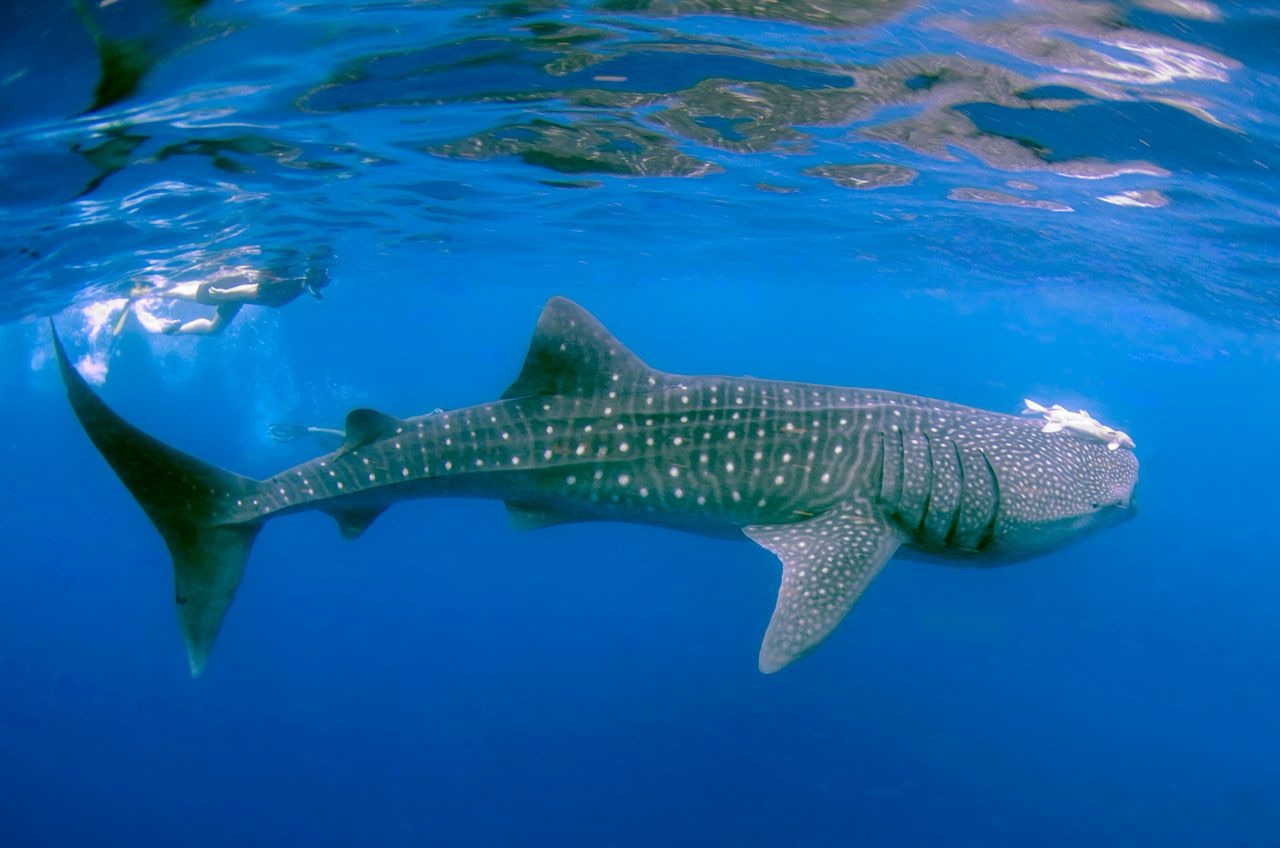
Seychelles is entering whale shark season, giving visitors another reason to get out on the water over the coming weeks.
Every year, these enormous but gentle filter-feeding sharks pass through Seychelles waters, with sightings particularly associated with the waters around Mahé and the Inner Islands. The main seasonal window runs through August, September and October, with September and October often offering particularly good opportunities for encounters.
The Largest Fish in the World
The whale shark (Rhincodon typus) is the largest fish on Earth. Despite its size, it is a peaceful filter feeder, feeding on plankton and other tiny organisms rather than hunting people or large prey.
The sharks visiting Seychelles are generally young males, and individual animals can be several metres long. Seeing one glide quietly through the clear Indian Ocean is an experience that can make an ordinary day on the water unforgettable.
Why Do Whale Sharks Come to Seychelles?
The answer is food.
Seasonal changes in the ocean bring plankton-rich conditions that attract whale sharks into the waters around the Seychelles archipelago. Their presence is therefore closely connected to changing marine conditions rather than a fixed migration route that guarantees sightings at a particular location.
This is also why whale shark encounters remain wild encounters. There is no guarantee that a shark will appear on any particular trip.
Where Can You See Whale Sharks?
Mahé is one of the important areas for seasonal whale shark activity in Seychelles, particularly along its western side.
Boat trips and monitoring activities operate from areas including Beau Vallon, giving visitors the opportunity to head offshore in search of these remarkable animals.
The Marine Conservation Society Seychelles has been involved in whale shark research and conservation for more than three decades and runs seasonal monitoring and eco-tourism activities during the whale shark season.
When Is the Best Time?
The current season runs from August to October, with sightings potentially continuing into November.
If seeing a whale shark is high on your Seychelles wish list, September and October are particularly worth considering. But the most important thing is to remember that these are wild animals: weather, plankton availability, currents and the sharks’ movements all influence whether an encounter happens.
That uncertainty is part of what makes seeing one in the wild so special.
How to Swim Responsibly with a Whale Shark
A whale shark encounter should always be about observing the animal rather than controlling the experience.
- Never touch or ride a whale shark.
- Never block or restrict its movement.
- Keep an appropriate distance from the animal.
- Avoid flash photography.
- Follow the instructions of the boat crew and conservation guides.
- Allow the shark to decide where it goes and how long it remains in the area.
Seychelles has a long history of whale shark research and conservation, so choosing a responsible operator helps protect the animals and the experience for future visitors.
Planning a Seychelles Holiday During Whale Shark Season
If you are visiting Seychelles between August and October, consider leaving some flexibility in your itinerary for a marine excursion.
The experience can work particularly well alongside a stay on Mahé, where you can combine whale shark searching with beaches, hiking, snorkelling and other activities.
And if you do encounter one, take a moment to appreciate just how extraordinary it is: you may be swimming beside the largest fish in the world.
Whale shark season has started. The next few months are your chance to experience one of Seychelles’ most extraordinary encounters — responsibly, in the wild, and on the shark’s terms.
Seasonal sightings are never guaranteed. Conditions and wildlife locations can change, so always follow current advice from local conservation organisations and qualified marine operators.